
Real-Time Urine Turbidity
Monitoring with
Nephelometry: A New
Diagnostic Tool
Meta Description:
Explore how nephelometry enables real-time urine turbidity analysis, supporting earlier detection of infections, kidney damage, and treatment response tracking—powered by Exypnos.
Introduction
Urinalysis has long been a fundamental tool in diagnostics. But in critical care, speed and precision are just as important as accuracy. Turbidity—the cloudiness of urine—can reveal infections, hematuria, and early kidney dysfunction. But traditionally, it’s been judged by sight. Exypnos is changing that with non-contact nephelometry.
What Is Urine Turbidity and Why It Matters
Urine turbidity is caused by particles such as:
• White and red blood cells (infection or hematuria)
• Crystals (kidney stones or metabolic disorders)
• Bacteria and mucus (UTIs)
While lab-based testing offers accuracy, it often comes too late for early intervention. In ICUs, real-time detection is needed to respond before deterioration sets in.
How Nephelometry Works in Urine Monitoring
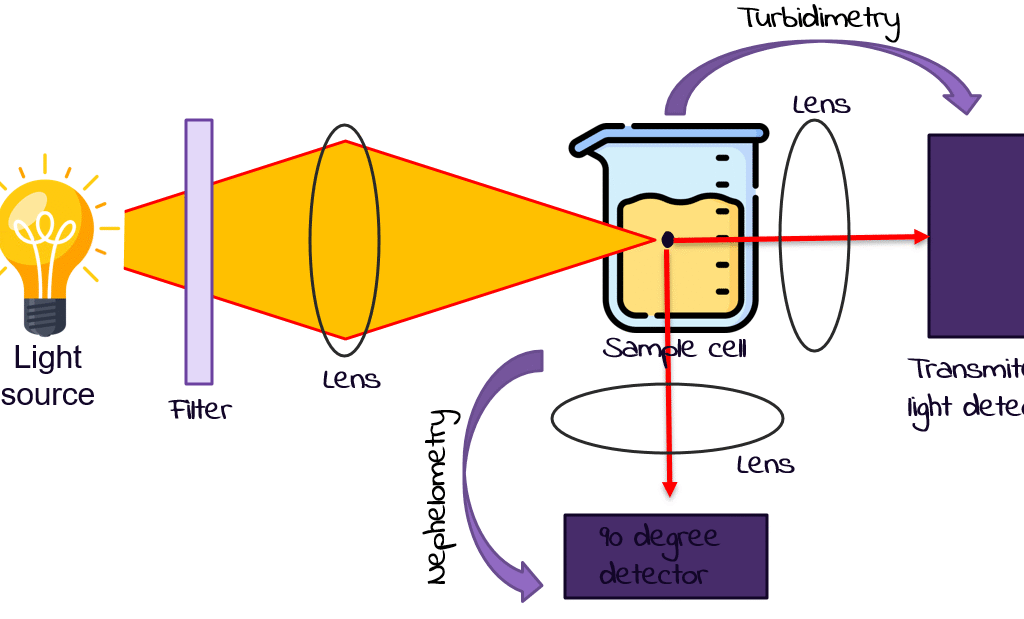
Nephelometry measures how particles scatter light. In Exypnos, a 90° laser scattering system captures NTU (Nephelometric Turbidity Units) values as urine flows through a sterile chamber.
Benefits of nephelometry include:
• Contact-free analysis (reduces infection risk)
• Precision at ±2% error rate
• Immediate detection of turbidity spikes (e.g., onset of hematuria)
• Continuous trending, not just one-time sampling
Real Clinical Applications
Nephelometric turbidity monitoring helps in:
• Detecting UTIs and catheter-associated infections (CAUTIs)
• Monitoring kidney injury in oncology or septic patients
• Validating medication response (e.g., post-diuretic flush)
• Screening high-risk populations (AKI, sepsis, chemotherapy)
It also supports predictive diagnostics when paired with AI logic, identifying patterns long before a clinician might see symptoms.
Why It Belongs in the ICU
ICUs demand fast, quantifiable, and low-risk data. Turbidity analysis has traditionally been too slow, too manual, or too invasive. Exypnos makes it automatic and actionable, adding diagnostic power without workflow disruption.
Conclusion
With Exypnos, turbidity is no longer a subjective guess. It’s a data stream—clean, continuous, and clinically meaningful. By using nephelometry, we give healthcare teams another signal to work with—one that might just arrive early enough to change the outcome.